VALENTINA
by PRISCILLA BRASIL
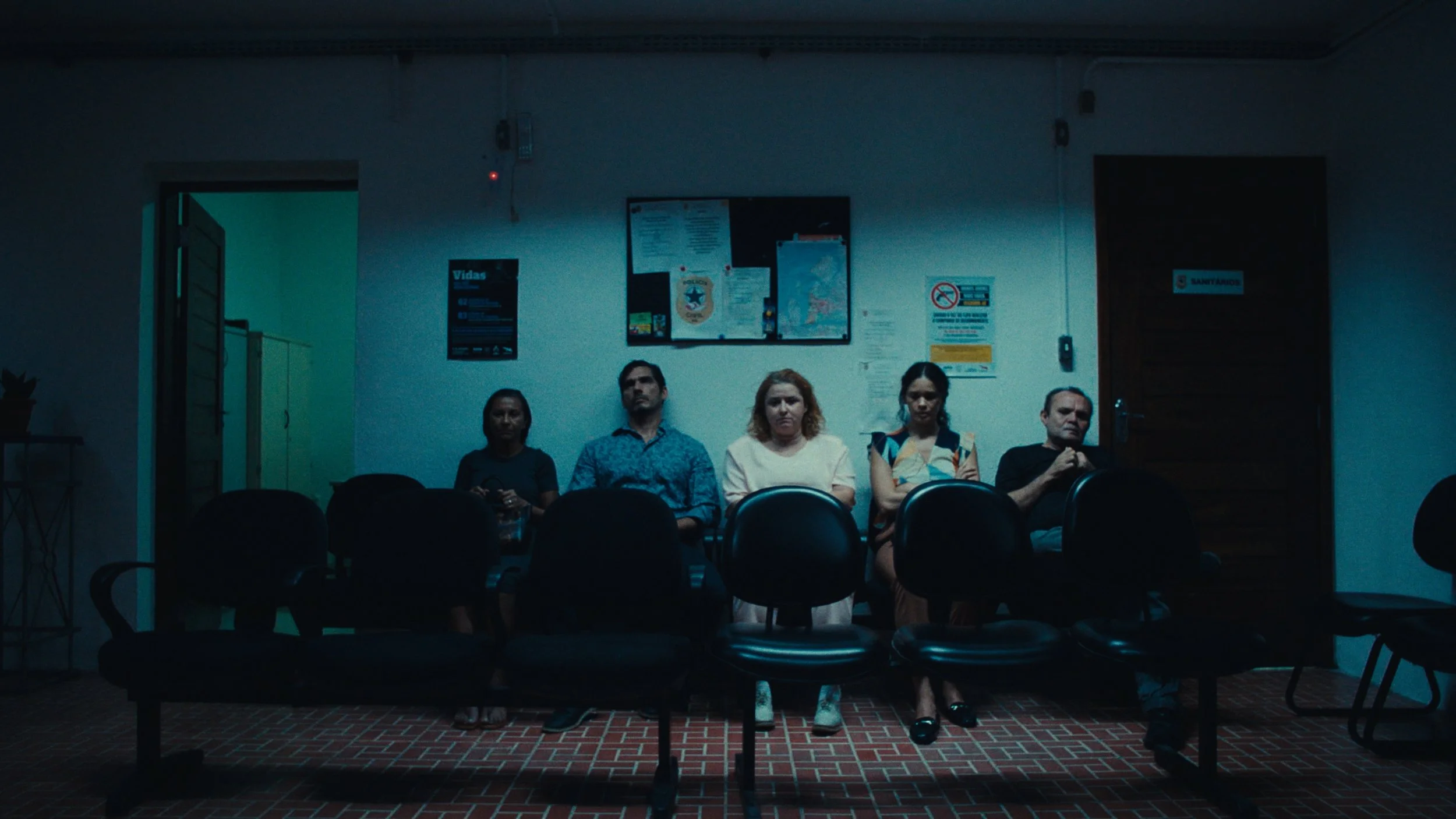
Dalledone, an ambitious lawyer, is given a difficult mission: to defend the leader of the Superior Universal Lineament sect, Valentina de Andrade, who is accused of ordering 20 crimes of emasculation and the murder of children in the heart of the Amazon.
Accompanied by Caio, his upright and idealistic intern, Dalledone is forced to confront public opinion, police misconduct, false witnesses, and an egocentric judge. He must also face the strange practices of the sect’s members, who, even during the trial, refuse to abandon the core principles of their beliefs.
“VALENTINA” is a courtroom drama in which its characters, living a pivotal moment in their lives, pursue their goals at any cost. A work of fiction that unveils the true structure of the Brazilian justice and media systems, exposing how prejudice can condemn people even before they are judged.
A satanic cult. Corrupt and unscrupulous police officers. An attempted murder. A serial killer. The Amazon.
“Valentina” shows all the violence of the invaded forest and reveals an Amazon beyond the Garden of Eden.
DIRECTOR´S ORIGINAL VISION
BASED ON A TRUE STORY - and on a extreme violent personal experience
A satanic cult and its leader, accused of killing two dozen children in rituals along the Transamazonian highway, wearing Ku Klux Klan robes and wielding golden weapons while awaiting rescue by extraterrestrials. This was the accusation hanging over VALENTINA DE ANDRADE MUÑOZ and the Argentinians from the Superior Universal Lineament in 2003. I personally attended the 12 days of the trial against the accused. There was a public outcry for justice—a kind of desperation mixed with the certainty that, for the first time, someone would pay for the string of macabre crimes.
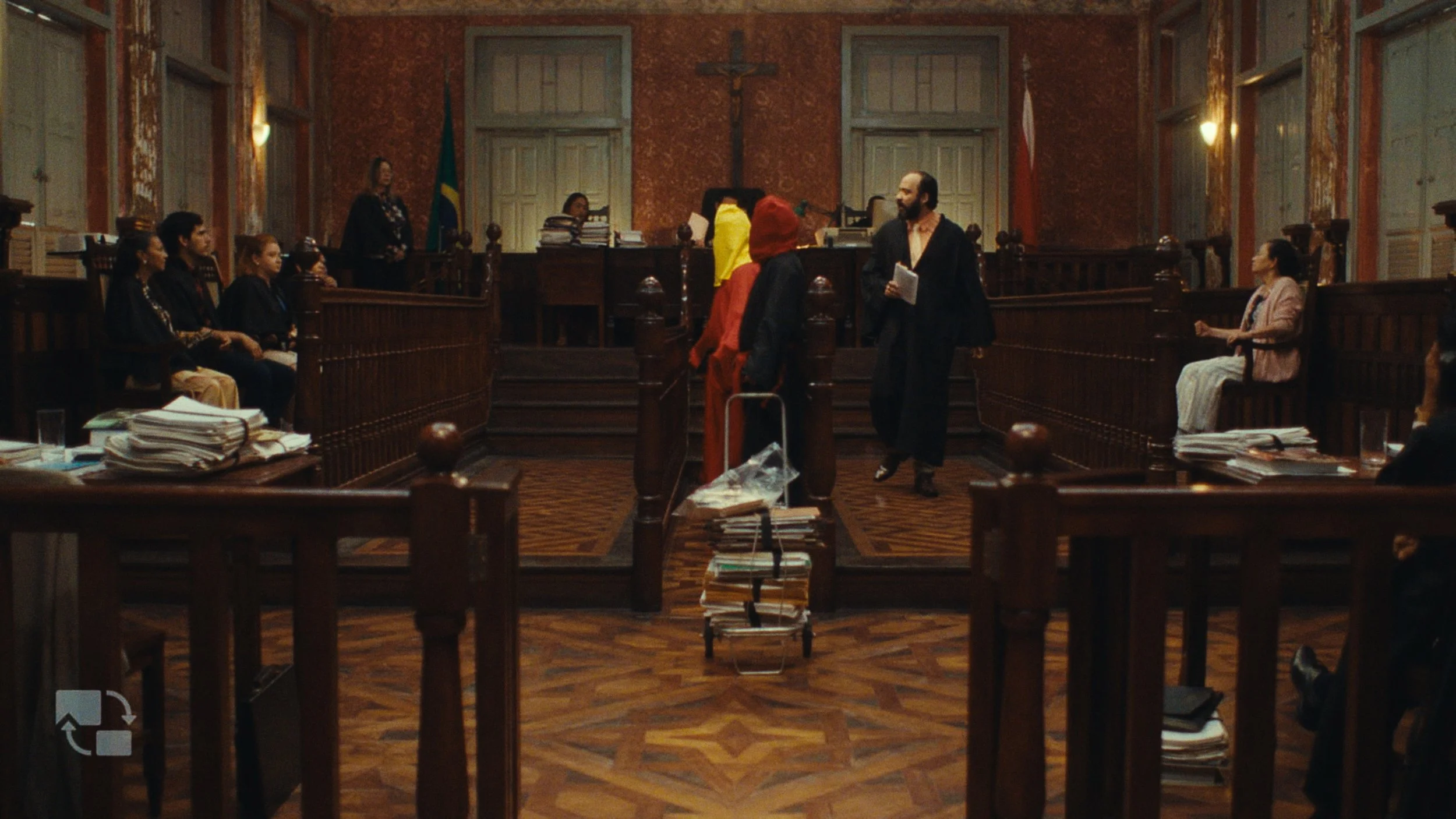
Belém, one of the most religious cities in Brazil, hosted a decidedly unsecular trial, with the courtroom filled with crucifix images. The city boiled with hatred, and the popular verdict was already given: the witch was guilty. The press mercilessly reported Valentina as the mastermind behind the crimes. Yet nothing connected this woman to the events or to the other defendants. Hatred had blinded everyone.
Valentina’s defense lawyer, still very young at the time, skillfully exposed every flaw in the case. He was the only one trying to use logic, while the prosecution shouted dramatic phrases, telling her to go back to hell or calling upon Our Lady of Nazareth to protect everyone—further confirming the medieval atmosphere. No evidence was ever found. No witness, no proof. Still, the media kept pushing her guilt.
I looked at the wall of the courtroom and saw a huge image of a crucified Jesus. Were we about to convict a woman simply because her beliefs were different and strange? Were we condemning someone because she believed she could be saved by aliens?
I watched the mothers of the children come and go from the courtroom. Their pain was undeniable—the loss of their children, the destruction of their families. Someone had committed those crimes. The children were dead. For decades, the narrative had cultivated certainty that it was the work of a satanic cult. Were these mothers prepared to change their minds?
No. No one in that room cared about the botched police investigation or about logic. The conviction had become a necessity crafted by the media. Convicting someone was more important than doing justice or stopping the crimes—which, in fact, continued even during the trial. Valentina’s acquittal was followed by the discovery of bodies in the home of Francisco das Chagas, a man who would go on to confess to all the crimes and is now known as the most prolific serial killer in Brazilian history, with 42 confirmed murders.
Dalledone is the main character and narrative guide of this story that blends courtroom drama and crime thriller, based on real events.
Before Valentina’s trial, four men (doctors Césio and Anísio, Amailton Gomes, and military police officer Carlos Alberto) had already been convicted for the murders and emasculations. Chagas’s confession—and the fact that he unearthed, one by one, the remains of children who had never been found—confirmed his sole responsibility for the killings.
Nevertheless, due to the slowness and perversity of the Pará State Prosecutor’s Office, these men remain imprisoned to this day, despite civil and federal police investigations having concluded that Chagas was, in fact, the perpetrator. Their lives destroyed by the justice system, they are still waiting to be set free.
DOCUMENTARY VS FICTION - radical language experimentations
Priscilla in the Film - Entering Valentina’s Story
I wrote a letter to each of my actors. I’ll share one of them here, because all of them were written with great sincerity, and I believe they explain in a very unique way what I went through.
Hi Gilda,
My name is Priscilla Brasil, and I’ve run a production company in Belém do Pará for 20 years. I primarily make documentaries in the Amazon, many of them filmed in conflict zones. Now, I’ve decided to take a major turn in my career and will be directing my first fiction film. It’s an unusual and difficult move for someone used to working with real-life narratives. But in truth, this film isn’t entirely fiction: it’s based on a true story. An absurd, violent, and unfortunately real story.
Exactly 20 years ago, I was trying to make my first documentary. My very first attempt - my first time ever filming anything. A so-called satanic sect was being tried for the murder of boys in Altamira, Pará. I decided to leave home and film the trial. At first, I was certain they were guilty. But as the long trial unfolded, I realized there was nothing against them—except the hysteria stirred up by the police and the media.
At one point, when I told my own mother I didn’t believe the accusations, I was accused of being part of the sect. In the end, the police seized part of my footage and I received threats. I was 20 years old. That almost made me give up filmmaking. I kept the tapes that survived and stored the material away, forever.
Ten years ago, my ex-husband, who was a federal police officer, was transferred to the Federal Police station in Altamira. At the back of a cupboard in the station kitchen, he found an old report that confirmed everything I had sensed back then... That’s how the lost film reemerged in my life in 2015, and I decided to write it as a fiction project. I managed to get a project approved—but then my husband was shot in the head in front of our house. Another tragedy that delayed the film for several more years. A new tragedy possibly linked to that same case.
Gilda, I know you already understand that the Amazon is no Garden of Eden, and that Belém is a very chaotic city. It lives under the weight of multiple, silent, and ongoing tragedies deeply tied to the ongoing invasion this region has suffered and still suffers.
This is a film about religious intolerance. About God and the Devil in a courtroom resembling an inquisition— but set in the 2000s Amazonia. The people wrongly convicted in this case died in prison. One of them, the only survivor, is still imprisoned. The error was never corrected.
Valentina, who was accused of being the leader of the Superior Universal Lineament, died last year. Since then, the film has gained momentum, and it feels like this is its moment. We have so much to say about religious intolerance, justice, lies, and fear—especially in the times we’re living through now. Perhaps it’s even more urgent now than it was 20 years ago. It’s a necessary film for the world we live in.
PRISCILLA´S TAPES
excerpts from the documentary footage of Valentina’s trial in 2003
The real tapes
Excerpts from footage captured by Priscilla Brasil and segments from the audiovisual archive research.
Valentina’s Jury Trial
excerpts of the prosecution, defense, and judge in action, filmed by Priscilla Brasil in 2003.
OUR PARTNERS
FULL EXCERPTS FROM THE FICTIONAL FILM SCENES
A POSSIBLE BEGINNING
EXCERPTS FROM PRISCILLA’S SCENES
A POSSIBLE BEGINNING